RSR Air/Fuel Ratio Gauges
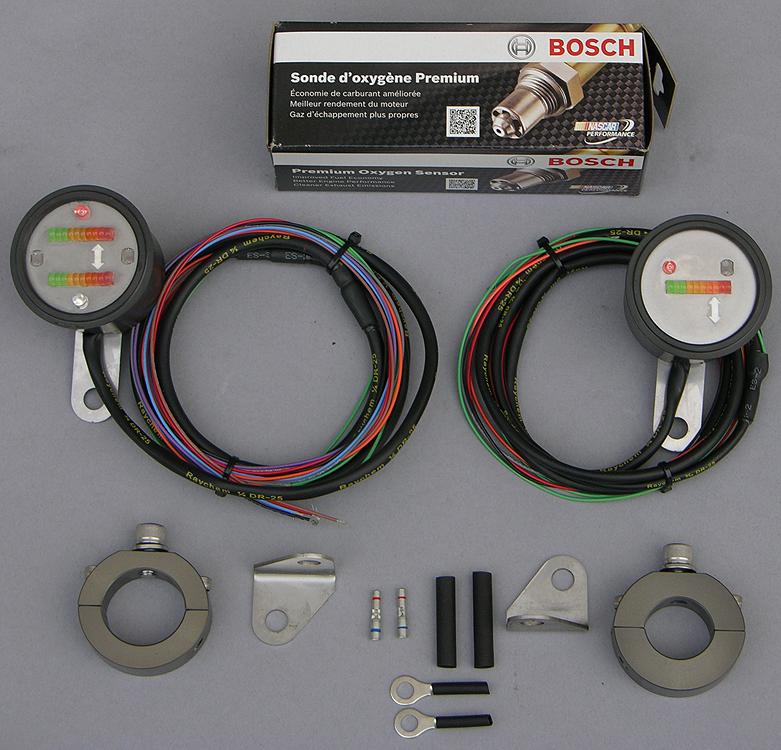
Whether your bike is
carb or efi this is the best way to tune...By riding and
observing, not on a static dyno. Dynos are not exactly real
world in terms of loads, airflow, or transitionals, and even
if you had a million dollar AC Transient dyno room, you would
still have to do real world testing. We have the most
sophisticated Motorcycle Dyno, a Superflow CycleDyn, with
integral speed-based dual fans, but we still ride, test and
observe in the real world and we have for nearly 40 years.
The gauges are dead
accurate and are millisecond fast responding which makes it
very simple to interpret or remember, even at a glance, while
you are dodging cars watching for cops. No spooling digits
just a four color bright display that illuminates a single LED
for a dead accurate AFR feedback. A PDF explains it's
use. You do not have to remove the gas tank to do the
installation.
The Single and Dual
gauges ship with eight feet of MIL-W-22759/32 wire. The first
24" is Raychem DR-25 sealed on both ends. The Green Wire
breaks out at 24" for your front cylinder Bosch O2 sensor.
Secondary wiring is sheathed in Raychem DR-25 where it passes
under the gas tank. The harness and the gauges are completely
waterproof. Late model 12mm Harley exhausts require secondary
18mm x .5 bungs as Delphi/Harley throws additional voltages on
top of the O2 voltage.
Anyone who tells you optimizing tuning is easy is full of shit. Engineers at Ford say they spend two years just perfecting tip-in or initial throttle openings. Ride, observe,..then change or edit with TTS MasterTune. No add-On gizmos. Keep your Delphi and OEM sensors. Do not be tricked into changing your Delphi ECM and using wide band and throttle angle based systems. Real world. Get your mileage and performance optimized.
Dead Accurate
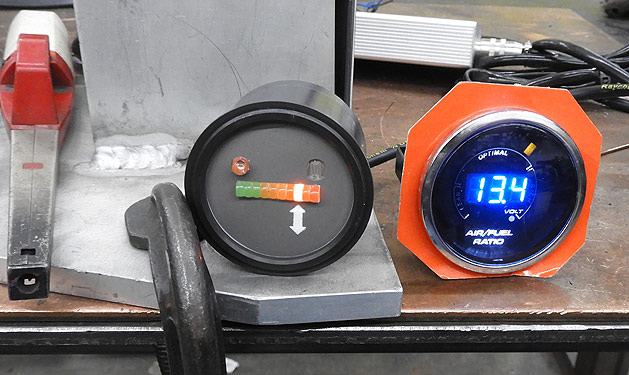
Here we are comparing
our RSR Single O2 Display versus the latest Bosch ADV 5 wire
Wideband Sensor (Pre-Turbo) sensor, not the common Bosch
LSU4.2/9 sensors. Our Second Orange Light being pointed at by
the white faceplate arrow shows the maximum torque and power
value of 13.2-13-4 AFR (.9 Lambda). Tested under heat with
regulated propane-air mixture.
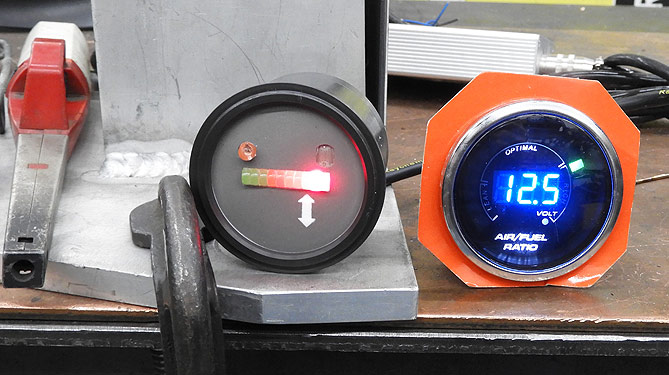
Shown above: Into the
First Red Light: Widely used 12.5:1 (into the 11.0 range) as a
target for temporary acceleration enrichment or a slightly
rich full power ratio and or a safe turbo boost target.
Second red light to
the far right is simply too rich 10:1 or richer if the engine
is at normal operating temperature. The second Red Light can
show on initial warmup.
Ride in the real world
and find out if your tune is right or not 20:1 AFR (RSR lights
Out) to dead rich (Last Red Light).
Fuck It... My Bike Runs Fine
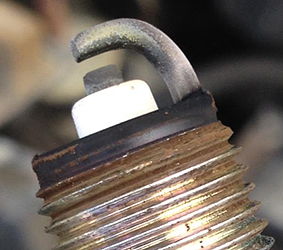
Ignorance is bliss as they say. Don't look at your spark plugs. Don't monitor your bike's AFR in the real world. Don't try to get your mileage back to what your stock bike got. Don't compare 40-60 and 60-80 mph roll-ons before and after with a stop watch. Don't monitor your oil temperature readings.
You should really read this PDF from a Champion Spark Plug Engineer...And get out your torque wrench and lighted 10X magnification spark plug reader.
All of the above plus
monitor as you ride. The only way.
Soot
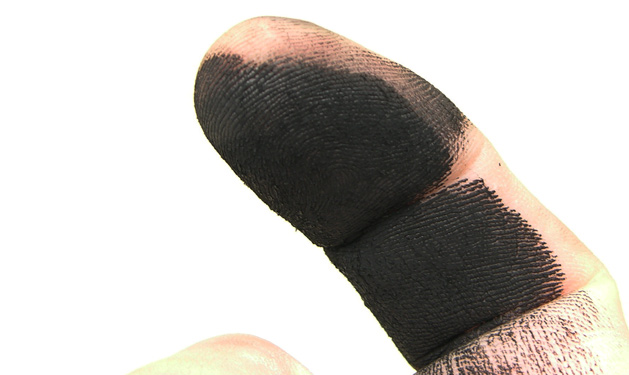
Whenever you look at an exhaust and see it caked in black soot you know the bike is not running or tuned correctly. Back in the mid 1980's we did a carburetor development program for Keihin Corporation for their 41mm CR Race carbs on both Shovelheads and the new Evolution motors. When we were finished the bikes got 56 mpg cruising and 46 mpg if you ran them harder...and after 500 mile tests the pipes were perfectly clean inside and the exhaust ports were dead clean.
If you take the
exhaust system off a modern Closed Loop BMW, as we have, you
will find them dead clean or whitish inside. Harleys should be
the same. We took the OEM exhaust off a 2014 Indian Chief and
the exhaust ports were perfectly clean.
We always ask what
mileage people get from their "tuned" or modified Harleys
after "Dyno tuning"....The universal answer is 37 mpg or less.
If they don't know, we ask them if they have to gas at 100
miles. Most do.
Once a customer bought an exhaust from us and took his bike to two different dynos in search of the "117 Hp" he was looking for for his 103...He got 110Hp. After pissing and moaning we told the guy to give us our exhaust back and we found it caked in soot. So much for tuners and their tail pipe sniffers that see lean reversions...They just kept adding fuel. You tell the customer to put on our RSR Air Fuel Gauge to monitor the mixtures F/R in the real world...No, they want a "Dyno Tune". We have dynos...we know what they do and can't do.
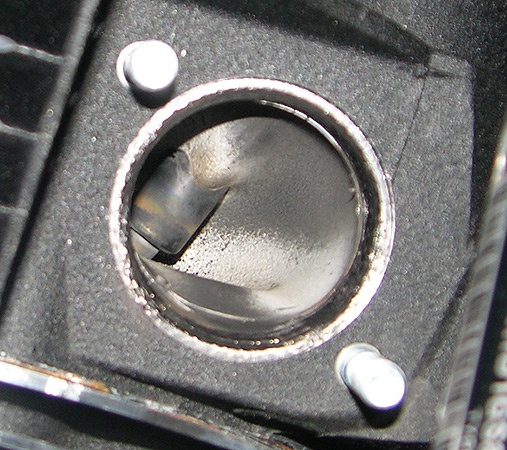
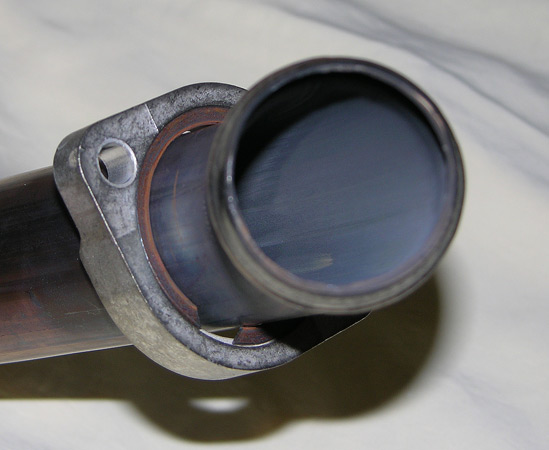
Pictured above is the exhaust port from a 2017 Dyna Low Rider S with about 100 miles on it. No soot. Delphi engineers seem to have done a very good job. Looks like the port you would see on a BMW. Now, when your "Tuner" gets finished with it, it will most likely be full of soot. Logic plays no part in people and their toys. EFI is complex...put in different cams, change air cleaners, port the heads and all this goes out the window. Brave new world.
No soot
Customer Comments: Dyna FXDX T124 S&S
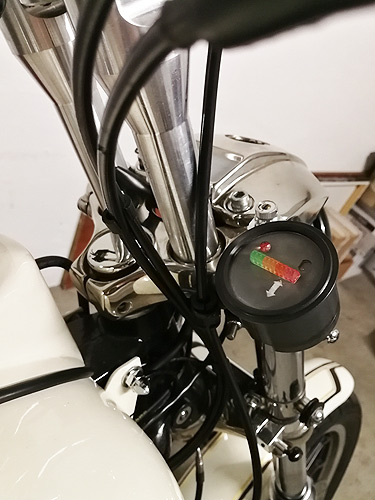
Customer writes: " Hi,
First feedback for the RSR AFG:
Why did I wait so long
to get it and saving money to the Dyno Jet? First issue, I
dropped the pilot / low speed jet to the correct size on my
Mikuni HSR48. It was way too rich. Now with everything
dialed in, the ‘warm’ idle will flicker between the orange and
red light, cruise is at the left orange light and hard
acceleration toggles between last orange and first red.
Now I got no issues to do tuning on the air filter or exhaust.
Thanks and best regards Ingmar"
Customer Comments
Customer
writes:
#1: Carb Bike
"Just
wanted
to reach out and thank you for making a superior product with
the afr gauge. Taking the guess work out of carburetor tuning
and following the color, I was able to really dial in my
bike. It now gets 52mpg, makes more power in all rpm
ranges, doesn’t gas/smoke out my buddies behind me, doesn’t
decel pop and the pipe is clean inside!
As a shop owner I felt I had a decent ability to tune a
carbureted bike especially with the staples of the industry
but I found with your gauge that it’s simply not possible to
know if your lean or rich in only a certain spot in the rpm
range without that O2 sensor feedback. It not only helps me
learn to see the very small signs that tell me something is
off with the tuning but to allows me to use this as a way to
give customers a truly ideal tune in real world riding
conditions.
Awesome product!!
#2:
M8 FXR EFI
Understood. Your
products work!!
So I realize I may have chosen the wrong/hard direction as far
as fuel injection/ignition management system. I used the
Thundermax route with the Namz stand alone harness to get rid
of all the m8 hand controls, security features and what not
that take up room I really didn’t have on the chassis.
This system removes the Knock sensors from the equation.
This makes for some nice fun when increasing compression to
figure timing as the stock map timing won’t work because there
isn’t a knock sensor to tell it to back off/retard when in or
approaching detonation event, therefore I have to create my
own curve in the software that set and won’t change.
I got your afr gauge set up and I figured out that the map
could be leaned out to exactly where I wanted it even though
Thundermax told me to not lean it out further than 13.5:1 as
“it could be unstable”. Bullshit. The system works
flawlessly with a good exhaust pipe.
With this gauge it’s really been a live and learn experience,
getting great gas mileage, great power in all the places the
dyno guy missed and has allowed me to get the timing dialed in
as I got the afr correct I could then add timing till my stand
alone knock sensor told me to stop or go back.
Great product as always.
Thank you,
Chad Mooney
Steady Rolling Motorcycles
Customer writes: "I can’t thank you enough for the great product. I
installed the O2 monitor as soon as I received it. It made
tuning the carb so much easier. It also gave me a better
understanding of what I have done wrong with other carbs in
the past. Thanks you again for your product and your advice.
Happy New Year
Sam Allen"

Customer writes: "When the gauge arrived I knew it would be of a very high quality, it has far surpassed my expectations. I was very eager to get this installed and take a look at my tune. Amazing to see how little adjustments on the carb effect the AFR. As a result of this gauge, I have dropped one size on the low speed jet, raised the clip on notch and confirmed the main jet on my Mik48. Thank you, I really like this gauge. Ed"
Follow the light to fulfillment
The Mother of all gauges! Not a gauge, but a precision tool that will tell you exactly what your engine is doing in real-time. Gives you instantaneous read-outs of air/fuel ratios from 17:1 to 10.5:1 and indicates maximum power ratios. Four color display is easily read in direct sunlight and automatically dims at night. Waterproof, billet aluminum construction. Your significant other will cheat on you but this gauge will never lie! It won't keep you warm at night, but a perfectly running engine will look and sound the same when you wake up next to it the morning after.
New Dual O2 Meters...For Sequential EFI
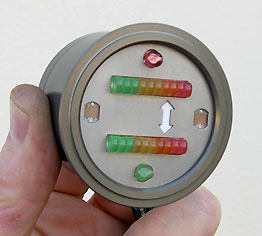
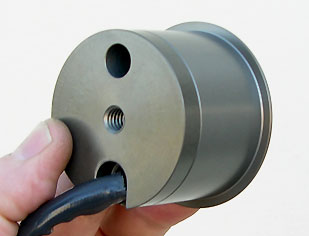
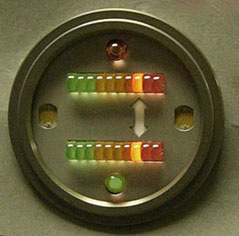
For EFi sequential injection our new RSR Dual Air Fuel Gauge displays the fuel mixture in both the front and rear cylinders separately. The gauge is housed in a hard anodized round enclosure in a standard 2" format with a 2.250" bezel, center back mount, with a 5/16" x 18 stainless socket head cap screw. The gauge will show fuel ratios from 17:1 to 12.0:1 (or richer). The gauge is visible in daylight and automatically dims for nighttime operation.
Scale is, left to right, lean to rich: three greens, three yellows, two orange and two red l.e.d.s.
Gauges are fully encapsulant sealed
with four different compounds and take about a week to
manufacture to allow for IP67 waterproofing. Mil-Spec 22759/32
wiring is used with Raychem DR-25 Heat Shrink. Full stainless
and hard anodized finishes.
New Small (12mm) and (18mm)
Narrowband O2 Sensors
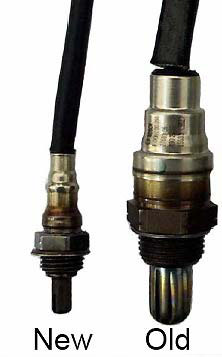
In 2010 FLT/H series went to the new small heated O2 sensors. The Dynas and Softails went to these in 2012 and the Sportsters in 2014.
Our LSR exhausts are tooled for these smaller sensors on all the newer models. The small O2 Sensor models have a floating ground voltage offset that has a complex scheme that varies the signal to meet emissions purposes. If you think you are going to trick these you are in for a surprise.
You must specify the year of your motorcycle when ordering the RSR Dual O2 Gauge. Models with the small OEM O2 sensors will require two 18mm O2 ports in addition to the 12mm ones to monitor your bike as you ride. Our RSR Dual Gauges will monitor the 18mm high temperature O2 sensors we supply. It is the only method to monitor both front and rear cylinders of your bike as you ride. Real world observations to perfect your tune. Better than a dyno which tends to overheat you motor quickly skewing your tune.
LSR 2-1 Exhausts can be ordered with
the dual O2 ports ( 12mm and 18mm) at no extra charge.
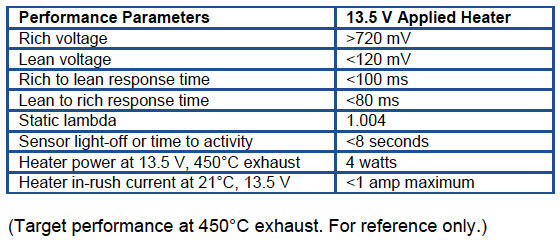
The above chart gives the response
times of the 2009 and later 12mm Delphi Oxygen sensors. In actual
dyno tuning you really have to hold one "site", i.e. the intersect
of load and rpm to get an accurate feedback as the sensors are
always "behind" due to their response times. That's why you see
Superflow engine dynos doing step testing so things can stabilize.
In a tenth of a second you could be at any location on the fuel
map...Not to mention the eight surrounding sites that are being
interpolated.
The problem with "holding things" on
and eddy current dyno is that is things heat up in these air
cooled engines and the hidden code in the Delphi ecm starts
changing things. You can really only do one wide-open throtte pull
on a dyno at one rpm and load site before the engine heats up too
much.
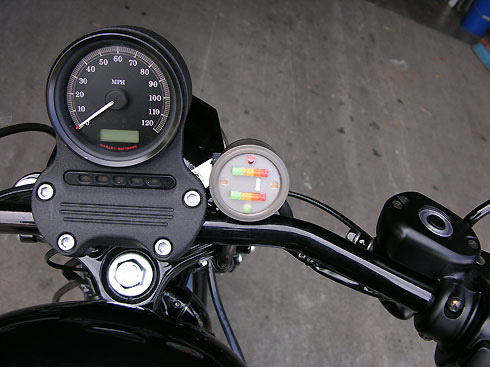
The white arrow indicates the maximum power mixture, the second orange light, which is 13.2:1. Transitory enrichments should not, if the engine is warm (>200F Oil temp), go past the first red light. Readings at the far right side of the scale, the second red light, are simply too rich. Proper closed loop operation will cycle back and forth from green to orange around the center of the display.
It is simply the best way to evaluate the tune of your motorcycle and saves valuable dyno time. Mounted permanently. Waterproof.
Compatible with OEM narrowband sensors. Can be supplied with new high temperature Bosch narrowband sensors. Far right photo shows gauge in dim light conditions at maximum power setting.
Dual or Single Gauge?
Pretty simple. It depends on what you have.
If you are running a carburetor order the single display meter. All RB Racing LSR 2-1 exhausts have had a front O2 port for over 30 years. You want to monitor the front cylinder as it requires more fuel. The rear cylinder runs a bit warmer as it is shrouded and it needs less fuel...True, whether you believe it or not.
If you are running an 2006 Dyna or any of the later year dual O2 port, sequential injection models, order the dual display meter.
Handlebar Mounts 06-1025 / 06-1024
06-1025 Hard Anodized Billet
Handlebar mount with two degrees of freedom stainless mount.
Available for 1" or 1 1/4" handlebars. $49.95. Shown with three
degrees of freedom mount for on upswept portion of the
handlebars.
06-1025 Hard Anodized Billet CNC machined Handlebar Mount. Available for 1" or 1 1/4" handlebars. $49.95.
The gauges have a center back mount
5/16" x 18 x 1/2" Stainless Socket Head Cap Screw and stainless
lock washer. You can fab your own bracket for this anodized
billet clamp or order the 06-1024 Mount Stainless Brackets. They
are sold in a pair for either mounting on the horizontal (near
bar clamps) or on the upswept portion of the handlebars 90
degree offset bracket. The two mounts are cnc laser cut 304
stainless steel. $9.95
Installation Instructions
for both gauges can be downloaded in PDF format.
Front
O2 on Some Models like M8 Dressers

The front O2 18mm bung is practically
buried on M8 Dressers. A 7/8" Crows Foot on an extension works.
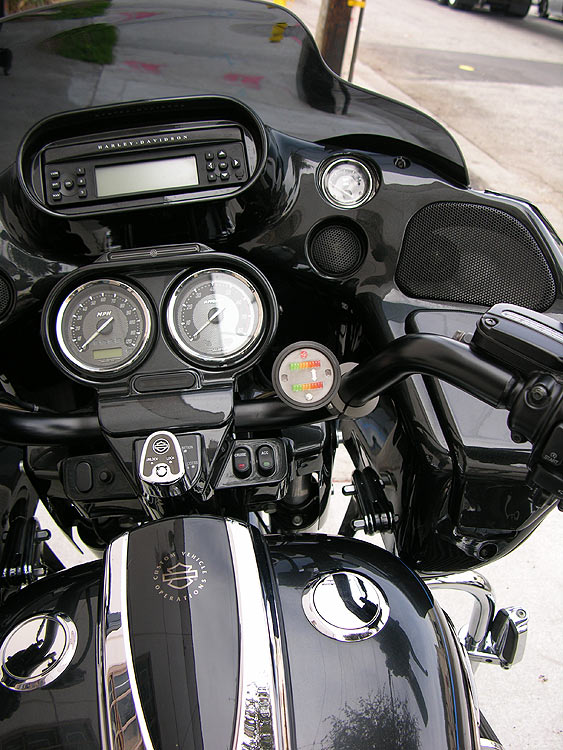
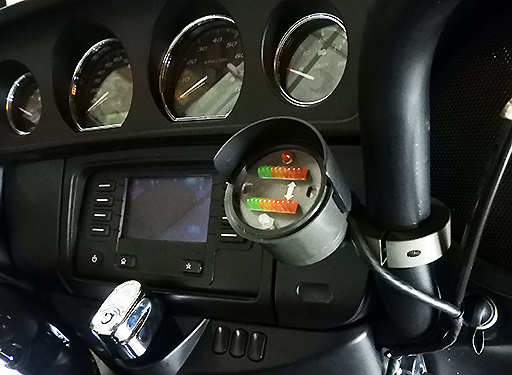
Here the RSR Dual Gauge is mounted on 1.250" bars on a CVO 110" Road Glide with one of our LSR 2-1 Pro Stock RaceCat Systems.
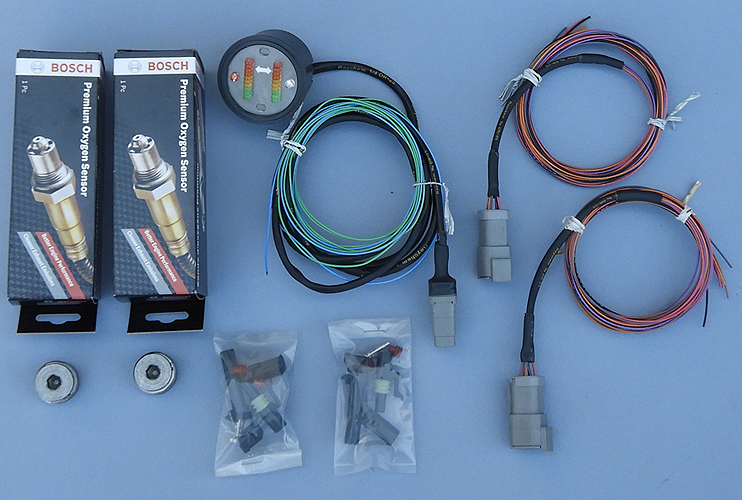
A Bonneville Racer asked that we make the gauge switchable
from his Bonneville racebike to his Dresser. The RSR Dual AFR
Gauge has eight wires, two for the O2 sensors, and 6 for power,
ground and the two L.E.D. warning lights (Red & Green). We
added a Deutsch 6 position DTM connector and supplied him with two
secondary harnesses with matching 6 position DTM Connectors and
Weatherpack O2 disconnects.
With the Bonneville Salt Flats about gone we guess this may
stay on his Dresser come next August. He races long course with a
120" Harley.
Internal Potting: Four Different Compounds
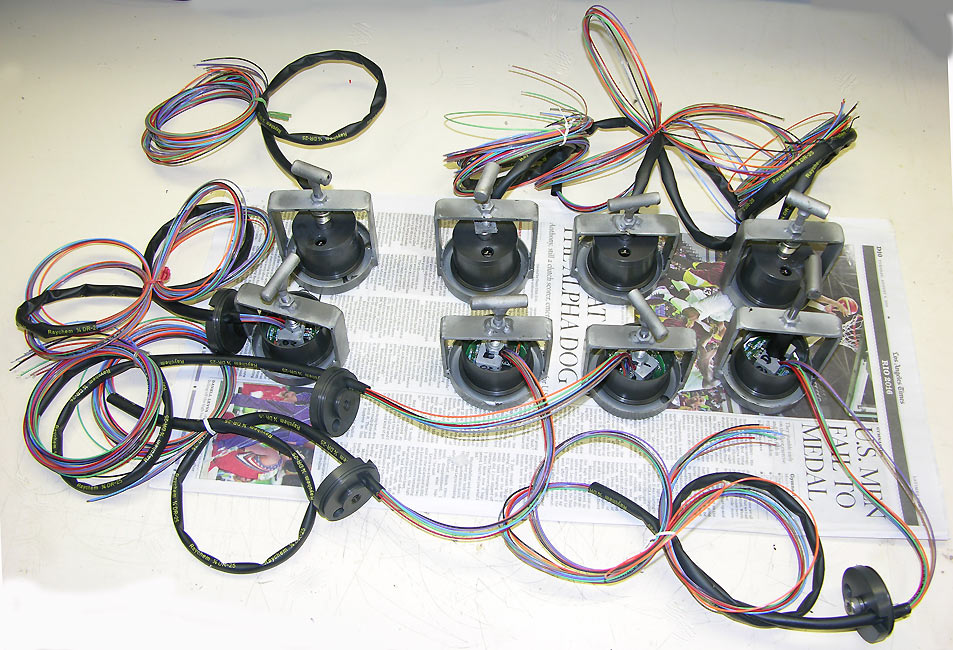
This does take time as
each step involves a day of curing. The eight gauges above are
being final potted with a two part epoxy after the previous
three cures have been made. They will sit an additional few days
to complete the curing of the two part epoxy. After that the
Raychem DR-25 is heat shrunk and sealed. The gauges are then
tested a final time, cleaned and packed with the installation
hardware and billet mounts. The whole process takes more than a
week.
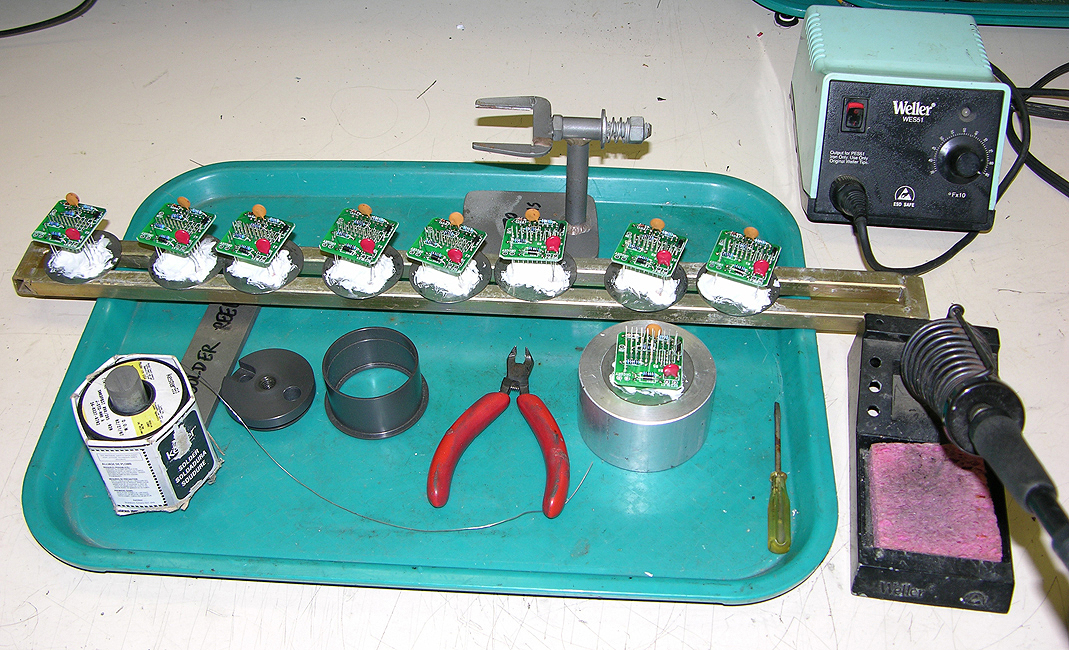
The nine gauges above are in their second stage of curing waiting for additional assembly on the circuit boards. When the entire process is finished they are completely water and shock proof and are enclosed in corrosion proof hard-anodized billet cups.
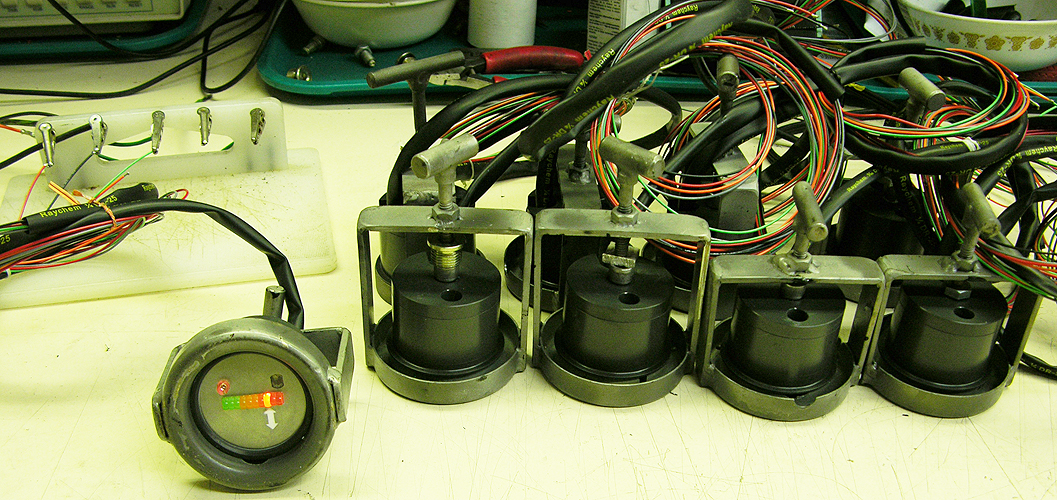
Final Oxygen sensor
simulation on our RSR Air Fuel Ratio Single Display Gauges
before the hard anodized billet RSR Air Fuel Ratio Gauge cups
are filled with a two part epoxy to make them vibration and
waterproof. There really is no turning back at this point as
three separate compounds have already cured inside the cups
locking the electronics into place. This is the third electrical
simulation/check with a fourth and final check made just before
shipment to the customer.
Final operations to do: Heat shrink the Raychem DR-25 harness
tubing and seal the harness ends with Raychem ES2000 tubing and
package the gauges with billet handlebar mounts and wiring
hardware. With fabrication, assembly, and curing times plus
packaging this takes longer than one week. They are Harley-proof
at that point.
These single display gauges are headed for Harleys with
carburetors. Our Dual Display Gauges are used on EFI bikes.
We have been making air
fuel ratio gauges for well over 30 years and we still keep
improving them. We make them in house. There is no better way to
monitor your air fuel ratios in the real world.
Road Toad...The Movie
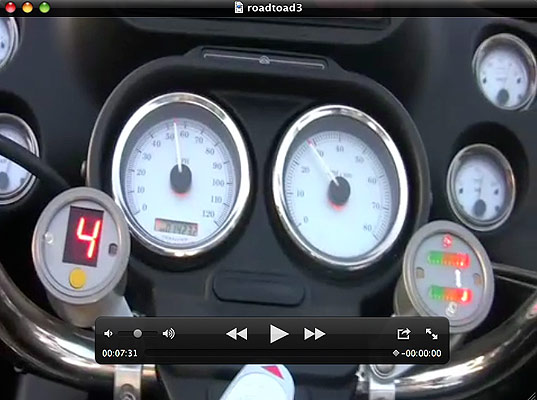
Harleys vibrate. Next time we'll make a better camera mount. Video shows the gear indicator in action on a 5 speed 2004 Road Toad as well as our RSR Dual Air Fuel Ratio Gauge. We made a few edits to the TC88 ECM for our LSR 2-1 Pro Stock Spyder exhaust. Gives you an idea of how we tune things by actually riding them and how useful the Bonneville Gear Indicator is.
O2 Meters and Tuning...Customer Comments
Customer writes: "When the gauge arrived I knew it would be of a very high quality, it has far surpassed my expectations. I was very eager to get this installed and take a look at my tune. Amazing to see how little adjustments on the carb effect the AFR. As a result of this gauge, I have dropped one size on the low speed jet, raised the clip on notch and confirmed the main jet on my Mik48. Thank you, I really like this gauge. Ed"
Customer writes: "Can I use your Air Fuel Ratio meter on Carburated V8 ford motor? I used one that I purchased from a friend on my 124 S&S motor. It worked much better than the dyno shop. I had my motor dynoed then took it home and installed my Air Flow meter. It was running pretty fat. I leaned it out a bit and to my surprise it was like adding 15 hp to my bike. Maybe more. The dyno came back with 156 hp to the rear wheel. Anyways I digress. Back to my question. V8 Ford 302 Carburated motor. will this meter work on a V8 motor."
RB Racing: "Yes".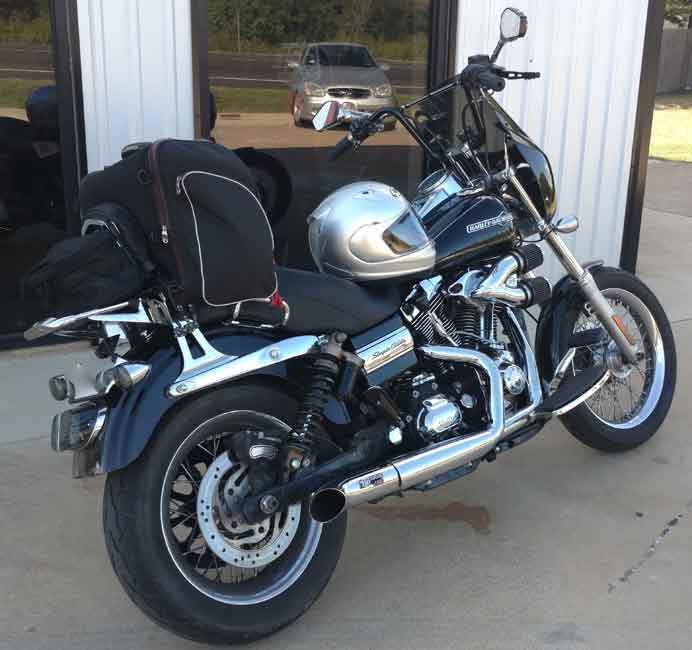
Customer writes: "Sounds like a FAST Harley! Revs quicker. Everyone that knows the bike immediately notices how the engine has better throttle response now. One blip of the throttle is all it takes to spark envy. It has a noticeable volume and powerful sound on acceleration complimented by a smooth deceleration growl. Cruising volume is somehow arguably quieter than the V&H slip-ons that were on the bike previously. The chrome is flawless. Packaging was excellent. It’s amazing how spot-on the fitment of the slip joints are. The mounting bracket is perfect in form, fit and function. Everything eases into place with a slow methodical hand. Don’t force or rush the installation and you will complete it without frustration. I bought the Dual AFR meter at the same time as the pipe. I cannot imagine an easier way to tune with my TTS MasterTune! I was able to actually improve the tune and power while maintaining 43 mpg. Thanks! Ryan"
00-1316 LSR 2-1 using RSR Dual Air Fuel Ratio Gauge.
Customer writes: "I had my TT 500 landspeed motor on the dyno the other day. Fueling was spot on thanks to your AFR gauge used on road tests. The dyno operator pointed out how the RB gauge was agreeing with his test equipment. You guys know this but we were both very impressed. I am still using Mikuni carbs so I use a marked twist grip and keep my Sudco book handy. This gauge has now made about 20 runs on the salt and covered many road miles with no problems. This 500cc single vibrated two of the K&N units to death in no time before that. Thanks, Tony."
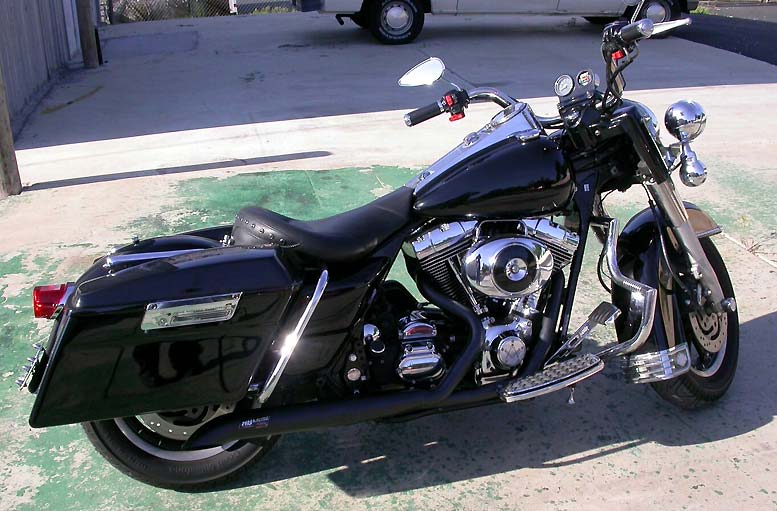
Customer writes: "Hello, I have installed your 2:1 LSR pipe (00-1122) with the AFR gauge. It's the best money I've spent on my bike. The fitment of the pipe is great and it was not a wrestling match to install as are most other pipes. Thanks for the great product. Kenny".
Customer Writes:
"I received my RSR Air/Fuel Ratio Gauge in October and
installed it within the week. I am very happy with the Gauge,
I have adjusted the Mikuni based on the gauge indication. I
feel that the RSR Air/Fuel Ratio Gauge is very accurate and
repeatable. When I have the Mikuni adjusted just where I want
it, then the engine temperature drops 20 or 30 degrees. The
RSR Air/Fuel Ratio Gauge may be your greatest sales tool for
your RSR Efi. The fuel ratio gauge constantly reminds me of
the limitations of the carburetor.
I have continued to read and re-read the information on your website. It is informative, educational and often entertaining. Based on you recommendation, I ordered the Compu-Fire 40A 3-Phase charging system and I plant to implement all seven of your Recommended Procedures and Comments."
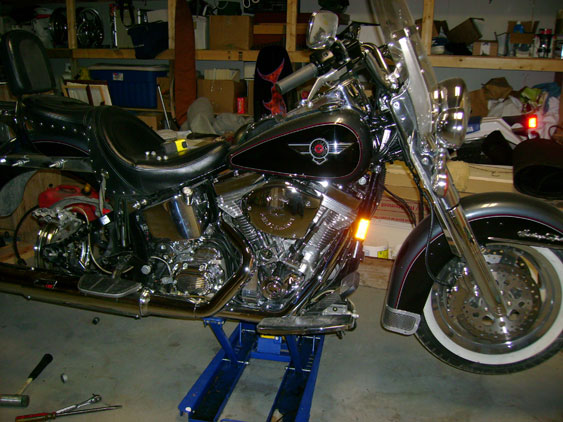
Customer writes: " Thanks for the pipe and fuel ratio gauge. It was worth the wait. 116 inch with 2 inch pipe. The bike sounds really good. I have had the Thunder Header before and did not care for the sound or the performance. The pipe was too small though. This pipe sounds like a Harley should and it seems to rev quicker. Without the RSR Air Fuel Ratio Gauge I would have had different jets in it. { do not want to pay for dyno! } Thanks, Gregg." 00-1124 LSR 2-1 Turn Out, rotated 45 Deg, chrome w/ three heat shields."
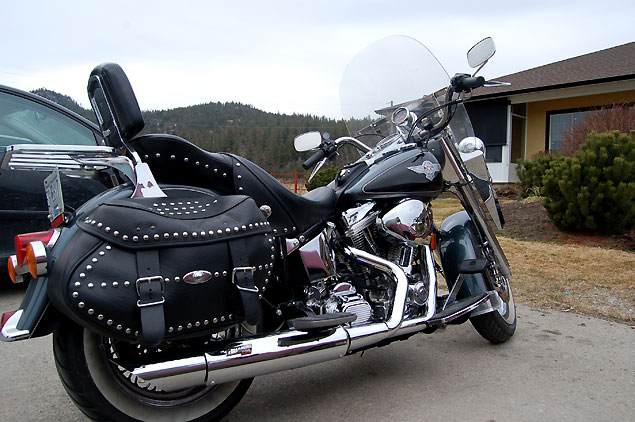
"Attached is a photo of the pipe installed, just wanted to let you know the fit and finish were excellent, at first the sound was louder than I expected but probably because I had the slash turned down, now that I have gotten used to it I really love the sound . It also improved the performance along with running smoother, the RSR fuel ratio meter made the tuning a snap. This is on a 127" very happy motor. Bob". Part Number 00-1245.
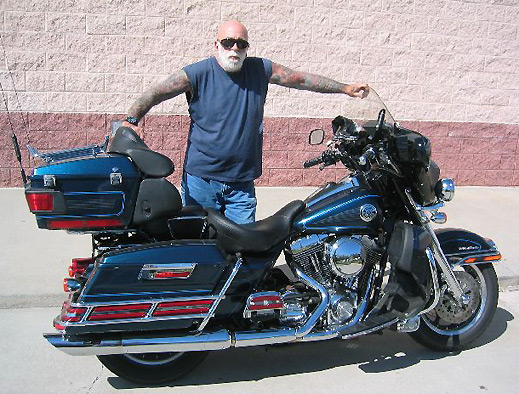
00-1236 in chrome with heat shields. Joe used the two O2 ports to dial the efi in. You can't stick a sniffer up the rear of these pipes...all you are going to sniff is a bunch of outside air. Tuning has to be monitored at the exhaust ports with O2 feedback. "Using your RSR Air Fuel Ratio Gauge is the way to do it."
The gauge is an
industry standard 2" format and is unique in it's ability to
provide the driver/operator/tuner exact information that is
easily understood and remembered in stressful situations.
Sitting on a 425hp motorcycle with 24 lb. of boost you have
little time to study instruments... It's impossible to read a
numeric digital display...Running flat out at 200 mph plus you
just can't take your eyes off the course!
The RSR Air/Fuel Ratio Gauge uses 10 ultra-bright LED's in four colors: 3 green, 3 yellow, 2 orange and 2 red. It's very easy to remember last yellow, second orange, first red etc. Designed to be permanently installed on your vehicle it will provide you accurate data to perfect your engines fuel needs as only one light is lit at a time. Extensive testing has proven this to be the optimum combination. In addition the gauge face plate is marked for Stoichiometry as well as peak power Air/Fuel ratios.
What do the strange lights in the sky mean? Are we about to be visited by Sculley and Mulder? Get a grip on yourself, we are talking about gauges not tequila sunrises. If the display gets to the 2nd red (far right) your situation is too damn rich. Further detailed information as to exactly what the air/fuel ratios are for each light and what your target points are for full power, acceleration fueling, steady state operation, idle mixture strength, maximum economy etc. are all contained in a eight page manual that comes with the gauge.
Put your bike on the dyno and....
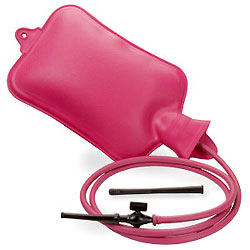
If you surrender your bike to the hands of another they are going to stick a probe up your pipe to see what's going on. Long rubber tubes, pumps and gas analyzers. There's a lot wrong with this. First off, there is the nasty secret of reversion where the pesky 15 psi of outside air rushes back up the pipe to skew the sampling data. Then there is the fact that you have blocked the exhaust flow with your anally fixated device. Thirdly, there is the time delay of the sampling which means you are always "behind", no pun intended. Lastly, the load on a dyno does not reflect what you see in the real world.
You are better off running the bike in the real world and watching the O2 display which essentially operates in real time. It will reflect your particular riding style and will save you a lot of money compared to those $200.00 to $400.00 dyno sessions. If dyno numbers are your mantra then do all the tuning in the real world with the RSR Air Fuel Gauge...Then put it on the dyno. The dyno operators are usually amazed on how well the bike runs..."What did you do to it?" is the usual response.
The Red Light District
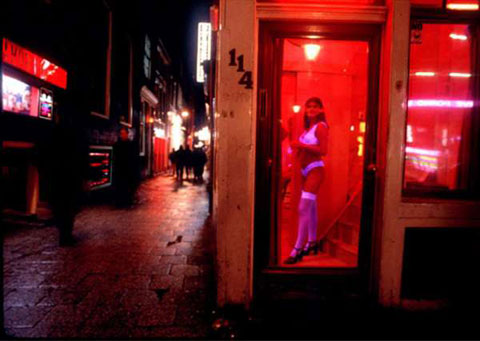
Go back to the top of the page. That big red light is a 12V Dc event based warning light. Two of the wires on your RSR Air/Fuel Ratio Gauge activate this light. One wire goes to a 12V Dc switched power source, the other goes to ground. If you hook the ground up to your oil pressure sending unit the light will activate if you lose oil pressure. People use them to indicate all sorts of 12V Dc events such as nitrous activation, rpm shift lights, high gear indicator (Bonneville), electronic water injection activation etc. etc.
The Dual Air Fuel Meter has two 12V Dc event based lights...We have big plans for these. You may use them for whatever nefarious purposes you have.
Twin Cam amd M-8 Heat Conundrum
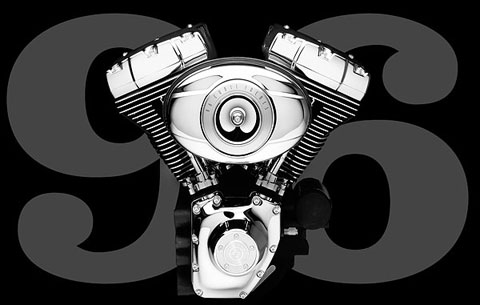
The impending beat of the water buffaloes hooves approaches. Behold the last of the air cooled dinosaurs, roasting your legs as if the comet of destruction had already hit ground zero with oil temperatures running 265 to 295 deg F. Ouch!
Oil temperatures in the old, old, days were under 200 deg F. In the mid eighties the 80" Evo arrived and temperatures went to 210 deg F. Oil cooler manufacturers scrambled to take your money. If you were stuck in the Hades of an Arizona Summer you might have been smart enough to run 70 weight Kendall oil. These days they tell you to run synthetic or your bacon will burn.
Those tiny little feed and scavenge gears didn't do much of a job pushing oil in any appreciable volume through a crappy little oil cooler so your scooter ran hotter as the years went by and as California pushed the limits of emission standards. "Cold" engines were dirty and needed more nasty hydrocarbons to keep them happy. Greasy, slippery lubricants like lead that reduced friction were sent to the aquifer and your liver but taken from your gas tank. More heat.
Along comes the TC88/96/110 etc. One extra cam forward and ten steps back. Tiny, tiny ports that trap heat, lean mixtures at or short of stoichiometry that keep exhaust gases hot. Cylinder heads that have virtually no fins save a few cosmetic slots and emission laws that sniff your fuel lines and your air cleaner cover. Cam timing with little or no overlap and restrictive exhaust systems. It's no wonder a new 96" fuel-injected Twin Cam makes less horsepower than a decade old 96" S&S engine with a carburetor and runs temperatures that scare you to death and push the outer limits of tribology and chemistry.
Catalytic converters that need heat NOW!
Brave new world. Buy a 900 pound $40,000.00 CVO Dresser and then dump another $10,000.00 into the powerplant so you can keep the faint glimmer of Goldwing tail lights in your windscreen. The heat you feel is not always power. The answer is complex and is often defined by the cards you are dealt. The heat you feel is not just the result of "lean mixtures". It's more complex than that.
Closed Loop and O2 Sensors
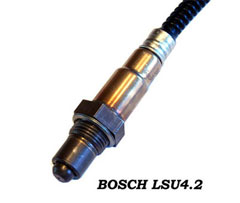
You drive down to the Harley dealer in your late model car or truck. It starts instantly, works perfectly for years, and it has narrowband O2 sensors. You buy your expensive Harley and want to take off the sophisticated Delphi Closed-Loop Narrowband system and put on a completely new system with Wide Band Sensors or, even worse, you want to put on a Power Commander that eliminates the O2 sensors. Is there some logical disconnect here?
You decide you want to tune your efi so it runs at 13.2:1 instead of 14.7:1. There goes 11% of your fuel economy. The fact is your engine will have the most complete burn @ 14.7:1 and that is where it should run for the best economy and driveability, just like the car and truck you went to the dealer in. Programming and strategy for closed loop tuning is not the same as it would be for carburetion.
You surrender your bike to some "expert" who tunes your bike in open loop ( closed loop disabled) with wideband sensors and then flips the bike back to closed loop and the OEM narrowband sensors. Guess what...he can't tune the bike at or below Stoichiometry but targets between 13 and 12.5:1 so your sophisticated Delphi ECM is always trying to subtract fuel to get back to 14.7:1. Every time you nudge the throttle a minute bit if extra fuel gets burned before it can be subtracted. You end up getting less mileage that it did stock. Hey, he's and expert...and it's your money. Never mind, he can get perfection in a couple of hours in a static non-controlled environment when Delphi or Bosch will take thousands of man hours. Comfort in ignorance.
If you install some device that installs between the factory OEM sensors and the ecu/ecm and sends a phony signal ... that's headed back to electric carburetor instead of a sophisticated closed loop system. Remember that vehicle you drove down to the dealer in.
In any case we make RSR Air Fuel
Ratio Gauges for our Bosch narrowband sensors . In many cases
for bikes with 12mm O2 sensors we install secondary 18mm O2
ports on our exhausts.
Fast, accurate, advice from a friend that doesn't ask for money
The RSR Air/Fuel Ratio Gauge becomes your expert witness...there is no more guessing or having two operators with two different opinions. If you see your mixture going dangerously lean you can instantly back off and save your motor. For developmental purposes you need to have quick answers for full power, transient and steady state operating conditions. The RSR Air/Fuel Ratio gauge is the best tool to provide these answers.
We have included a calculator that shows the relationship of various fuels to one another in terms fuel ratios. At a Lambda value of "1" we have stoichiometry or the point at which the most complete combustion takes place. Values of Lambda less than "1" are richer than stoichiometry and Lambda values greater than "1" are leaner than stoichiometry. You can enter a value for any fuel and the calculations will be automatically made for the other fuels as well a calculation of the corresponding lambda value.
RSR Air Fuel Meters available with O2 sensor, without, or all by its lonesome
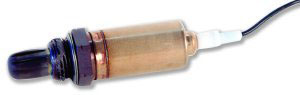
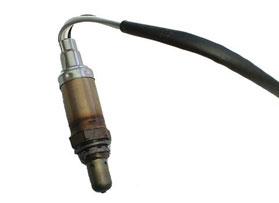
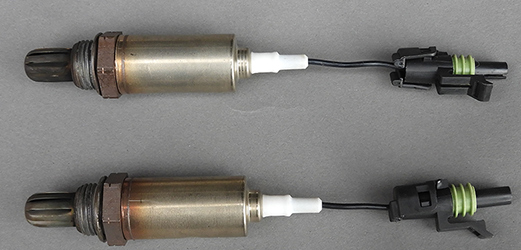
If your vehicle already has one Oxygen Sensor all you need is the single display RSR Air/Fuel Ratio Gauge. If you need to install an O-Sensor in your exhaust we have the 18mm x 1.5mm weld-on, machined adapters. One wire sensors are unheated and must be installed close to the exhaust port. Our Harley Davidson exhaust systems for 30 years have had an O-Sensor port in the front primary tube about 2 inches from the port itself and use one-wire sensors on carburetted systems.
We use four-wire heated sensors on our RSR EFI systems and use the single
display O2 meter with the O2 sensor in the front exhaust port.
"Heated" simply means it gets up to temperature quicker. Four wire sensors consist of: one signal wire, two
heater wires and a ground reference wire.
Late model Harley Davidsons with sequential injection require our dual display meters and use the oem narrowband (two wire) sensors. If you throw away your sophisticated Delphi ecu for some aftermarket wideband ecu (LSU4.2 /LSU4.9etc.) these gauges won't help you as the voltages are completely different with wideband units.
There will be a test on this at 2 o'clock.
Why EGT and Narrowband.... Not Wideband for Turbos
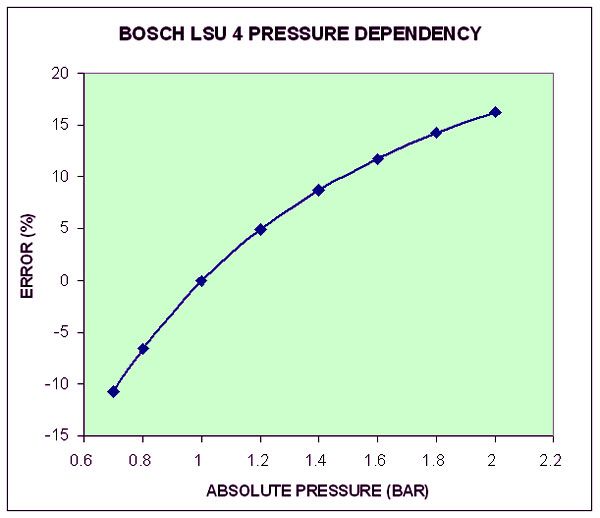
As you can see from the chart a
Bosch LSU 4 wideband sensor has a 15% error if subjected to 2
Bar exhaust pressure. On turbos you have to mount a wideband
sensor after the turbo which is a big problem because turbos,
at least in race applications, use short dump tubes and this
is way too close to oxygen-rich atmospheric air. On our race
bikes we use our RSR Air Fuel Ratio Gauge which is not
affected by exhaust pressure. On our Bonneville Bullett we run two
single wire high temperature Bosch O2 sensors in addition to
the dual egt ORCA Turbo Dash. Wideband LSU 4 sensors can be
damaged with egts greater than 1500 Deg F. We run above this.
We use specially calibrated NTK L2H2 sensors with pressure compensation
tables with our Pectel SQ6M
engine management systems.
A second reason you use egt on turbos is that, if you are running leaded race gas, any O2 sensor, narrow or wideband, will become contaminated, resulting in false readings. This can happen very quickly or maybe 10 hours later depending on the fuel used. When fouled, they render false lean readings. It is better to watch and record high egt temperatures which are completely unaffected by either pressure or racing fuels.
Check out our ORCA Turbo Dash for specialized turbocharger and supercharger applications. Used in conjunction with our RSR Air Fuel Ratio Meters these are the best way to tune and monitor your high horsepower application. We also offer RSR Bonneville Gear Indicators to you always know what gear you are in.